In 2009, University of the Pacific alumni magazine editors called for memories of filming Stanley Kramer’s R. P. M. on the Stockton, California campus in 1969, near its iconic Burns Tower. Alumnus and future regent Victor Ornelas—who had acted as an extra in the film—responded. He redirected the question, however, to the significance of that year during his time at UOP. Students across the US were protesting racism and the Vietnam War, and in 1969, these protests reached the Stockton campus. As Ornelas recounted, “We marched on Burns Tower and held a demonstration to bring attention to the lack of diversity, particularly Latino and African American (although we called ourselves Chicanos and Blacks then), on campus and ‘encouraged’ the university to rectify the situation.”[1] The students’ actions led to the establishment of the Community Involvement Program (CIP), a need-based scholarship and retention program for first-generation college students from the local community. The CIP story dispels Pacific students’ reputation for apathy, as do other instances of student engagement. While UOP avoided the violent disruptions that occurred on some campuses in the 1960s and 1970s, students made change and served the community. Indeed, this was and is a central feature of student life on the Stockton campus. This essay traces this theme by examining student advocacy in two settings: Anderson Hall and Burns Tower.
Anderson Hall
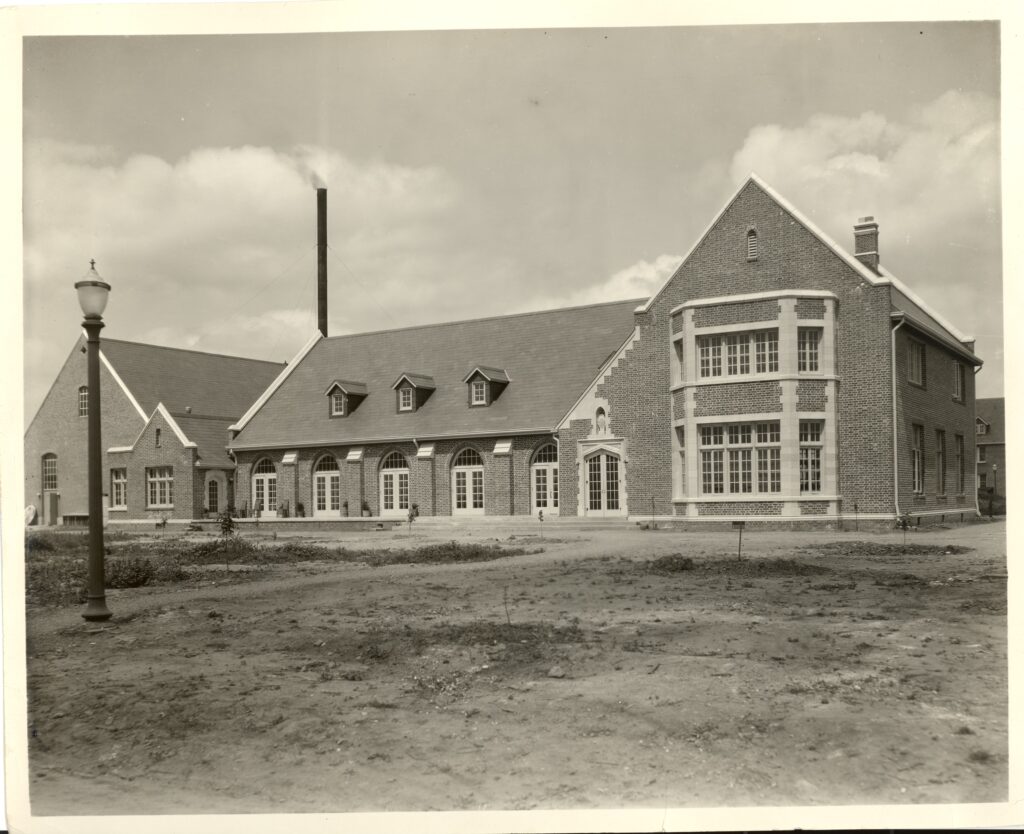
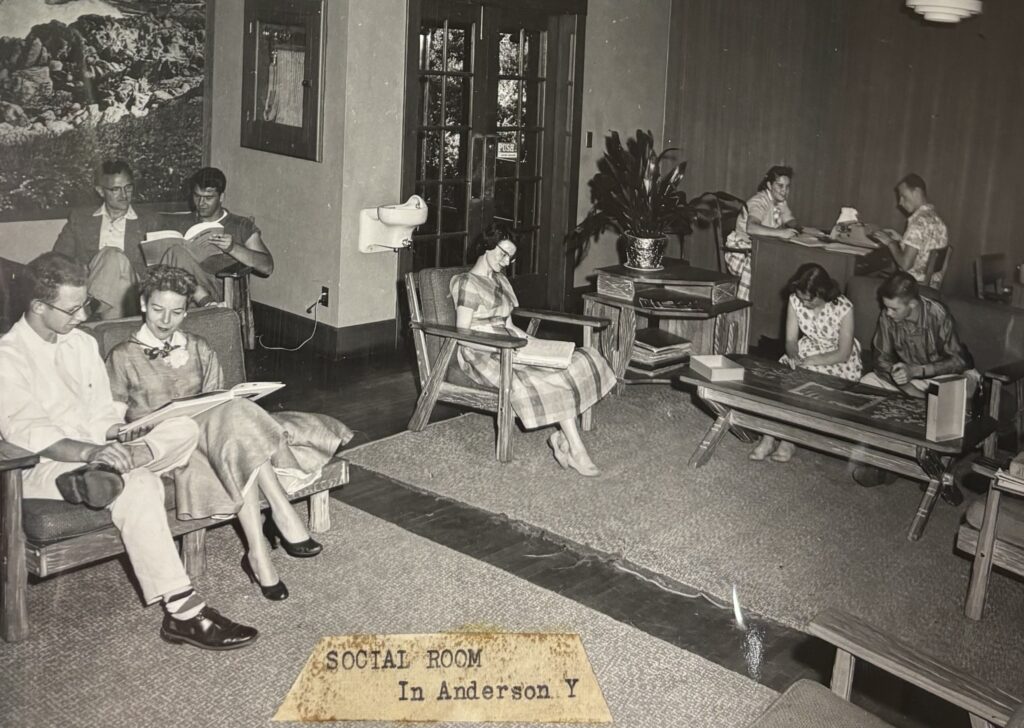
Anderson Hall, one of the original buildings on the Stockton campus, currently houses the president’s office, the Regents’ Room, and the President’s Room. Consequently, few on campus recognize it as the student-centered space it used to be. It first held a social and dining hall. In 1939, almuna Margaret M. Anderson and her husband W. C. Anderson donated funds to finance the construction of Anderson Hall’s northern wing to house the Student Christian Association (SCA).[2] The SCA combined YWCA and YMCA membership in 1934 and eventually came to be called the Anderson Y in honor of the Andersons’ support. It would later be the site of other student organizations as well.
The SCA (Anderson Y)
In the 1920s, the YWCA and the YMCA took root on US college campuses and remained mainstays of student-led community service throughout the twentieth century. As an affiliate organization, the SCA thrived on the Stockton campus, reflecting the aims of Pacific’s original Methodist founders and the larger American Protestant higher education movement—namely, establishing a Christian liberal arts college committed to developing individuals to serve humanity through the professions. (Pacific remains Methodist-affiliated but supports students of all faiths and welcomes non-believers.)[3]
Although they worked through separate auxiliaries for students of color in the early twentieth century, the YWCA and YMCA nonetheless came to address complex social issues head-on.[4] Likewise, Pacific’s Anderson Y was internationalist and progressive. One yearbook cited the student-centered group’s purpose as developing a “citizenry trained in democratic principles and dedicated to the furthering of a Christian way of life.”[5] This included dismantling discrimination. Yearbook photographs of student members from the 1930s through the 1950s show a multiethnic organization with Asian American students serving as board members. As early as the 1930s, the SCA had a committee on race relations that advocated for interracial experiences and raised awareness about racial injustice in the community, the nation, and the world. Such interracial advocacy worked in conjunction with the national Y’s broader peace initiatives. As World War II came to a close, for example, Pacific’s SCA established a Peace Parliament to support international organizations fighting to secure world peace, and also designated full rights for global minority populations a cornerstone of the group’s mission.[6] To that end, the SCA worked closely with other campus clubs, such as assisting the Far Eastern Student Service Fund’s fundraising efforts to aid students in China during World War II. In addition, when Cambodian families upended by war found new homes in Stockton, Anderson Y students were at the forefront of support, offering their children tutoring, swim lessons, and more.[7] Such projects and the SCA’s diverse membership underscore the club’s progressive and internationalist vision.
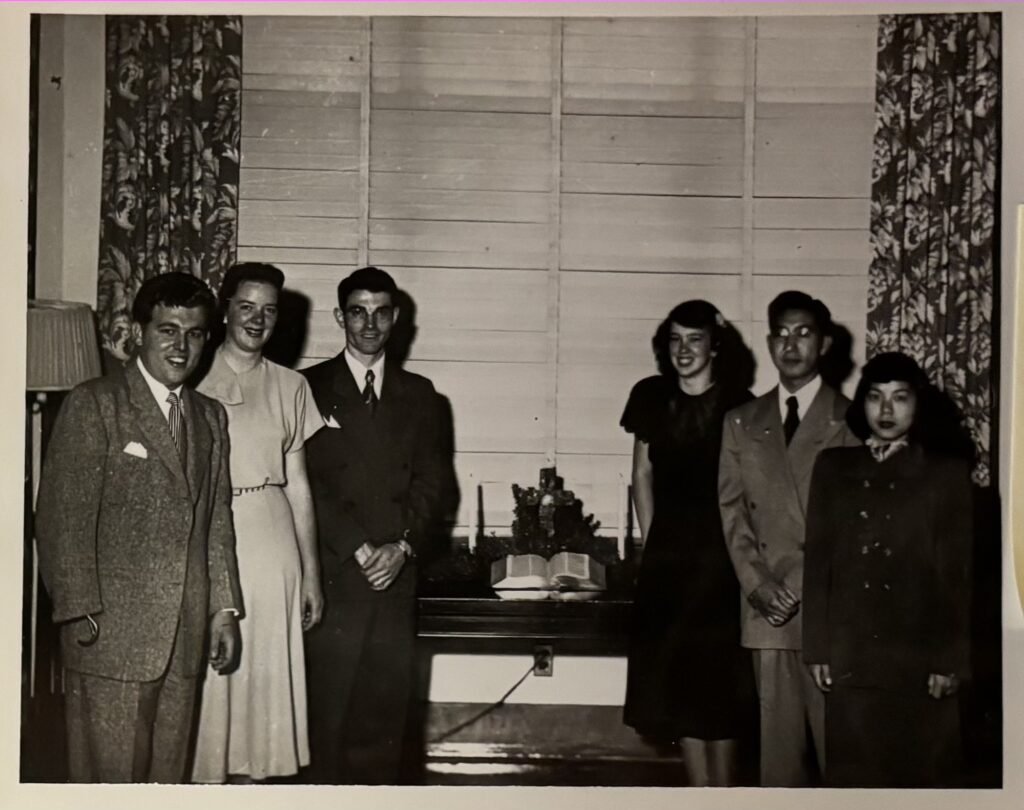
Well into the 1980s, the Anderson Y was well-known for its off-campus involvement and service to Stockton. According to philosophy professor Gwenn Browne, “Those were very special students. . . . The Anderson Y kids were always interested in the community.” Following the horrific 1989 school shooting at nearby Cleveland Elementary, Browne recalls, “It was our [Y students] that could do more with those traumatized elementary school kids, more than even the professionals that were supposedly brought in to deal with them. Because they knew them before, and they continued to work with them.”[8] The Anderson Y was recognized as one of President George H. W. Bush’s “Thousand Points of Light,” demonstrating the spirit of service. In the early 2000s, it was enveloped by the Center for Community Involvement and its religious aspects continued in the Interfaith Council.[9]

Anderson Hall beyond the SCA
Anderson Hall not only housed the SCA but also provided space for other student clubs and events, including “society meetings, lectures, exhibits, and entertainments.”[10] These clubs represented the diversity of the student population. Although the SCA was primarily a Protestant organization, Catholic groups also met in the new wing of Anderson Hall. Moreover, alongside debates, rally committees, fraternities, and sororities were a handful of clubs designed to enhance internationalism and belonging for identity groups. Even before the Anderson wing was built, Pacific hosted a Cosmopolitan Club, which also worked closely with the YWCA and YMCA, to foster “better understanding and friendlier relations among the various nationalities represented in the student body.”[11] Gurdial Singh, an international student from India, was president in 1934, and Japanese American student Isamu Sato was an officer in 1932. By the early 1940s, the group had changed its name to the International Affairs Club and continued to support programming around issues of international understanding. Pacific was also home to a Chinese Club for international students in the 1920s and 1930s, as well as a Filipino Club and a Japanese Club, whose members were primarily the children of immigrants to California’s agricultural Central Valley. In the early 1940s, over fifty of Pacific’s undergraduates across College of the Pacific and Stockton Junior College (now San Joaquin Delta College), were Nisei, the American-raised sons and daughters of the many Japanese families who worked in local agriculture and ran businesses in the San Joaquin Valley in the early twentieth century. Although a color line prevented them and other families of color from residing north of Main Street, these students found a home at Pacific.
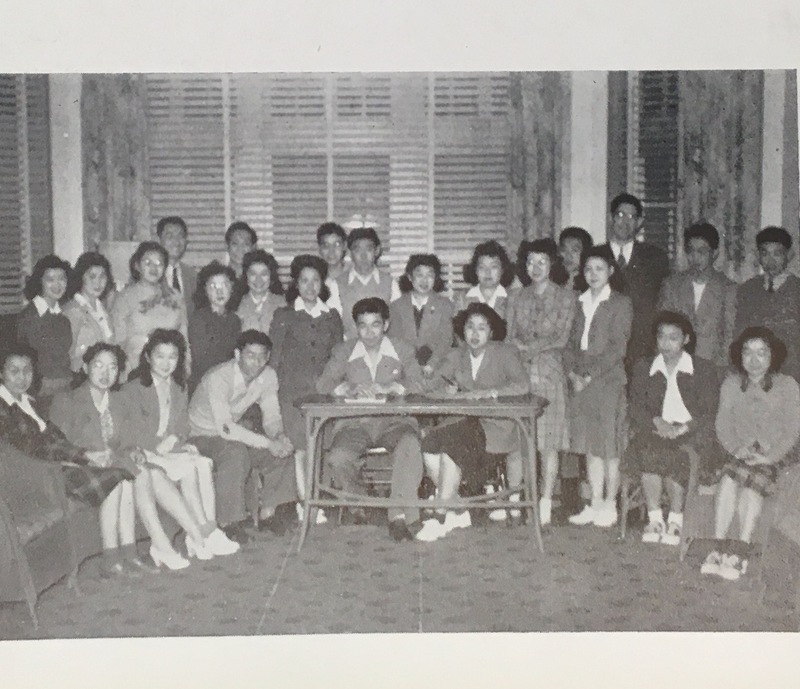
The bonds these students forged in the Japanese Club and through their work on campus publications provided a source of support, especially after President Roosevelt signed Executive Order 9066, which led to the incarceration of Japanese Americans on the West Coast. When the “evacuation orders” were announced, the Pacific Weekly covered the news, declaring, “Local Japanese Go,” and listed fifty-three impacted students.[12] The students and their families were forced to go to the Stockton Assembly Center at the Stockton Fairgrounds. From there, most went to Camp Rohwer in Arkansas, but Pacific students were also removed to Camp Amache in Colorado and the Gila River War Relocation Center in Arizona. With their educations upended and their futures uncertain, students brought their skills and networks into the wartime prison camps. Many continued to work on publications, such as camp newsletters, and others became teachers behind the barbed wire. There were also those who resisted. Richard Doi was sentenced to five months in county jail for leaving the assembly center without permission. Others, like Grayce Kaneda Uyehara, tuned to activism after the war, leading the redress campaign. During the crisis, while some campus departments substituted activities for graduation requirements that the interned students could no longer meet, only two earned Pacific degrees in absentia.
Anderson Hall, initially constructed as a student space, provided a place for Pacificans to address social issues, foster understanding, and find belonging. The SCA and other student groups based their service and social activities there. Students made similar use of Burns Tower as a location to enact change and social improvement.
Burns Tower
Dedicated in 1964, Burns Tower reflects both the gothic architecture of many East Coast college campuses and a distinctly 1960s modern aesthetic. President Robert E. Burns, for whom the tower is named and whose office was on the top floor, had been a history major at Pacific before serving as assistant to the president and then president from 1946 until his death in 1971. For Burns, the university tower stood for academic tradition and vitality. For Stockton residents, the tower remains an icon of higher learning—one largely unattainable without the CIP.[13]
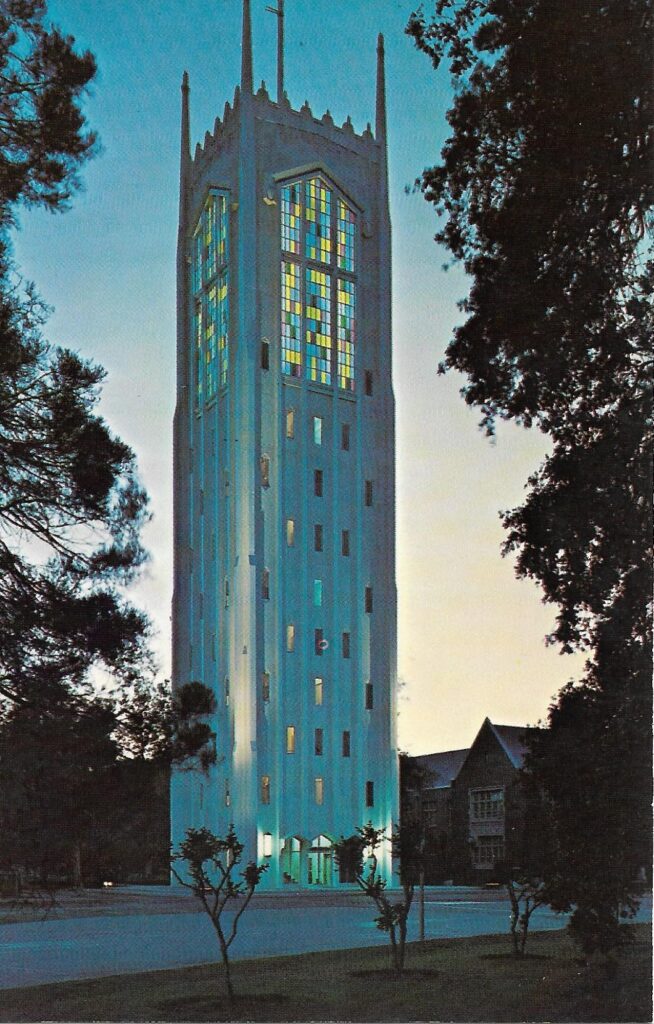
At the time of the tower’s dedication, student protests swept across the US, and Northern California was an epicenter. In the fall of 1964, when administrators at the University of California, Berkeley limited students’ right to protest so-called off-campus issues such as civil rights, students surrounded a police car in Sproul Plaza and occupied the central administration building. At San Francisco State University, students shouted, “On strike! Shut it down!” as they demanded increased representation for students of color, Black Studies and Ethnic Studies departments, and an end to bureaucratic racism. Police or national guardsmen clashed with protestors.[14] University of the Pacific avoided such violence, but Stockton students also demonstrated to demand change.
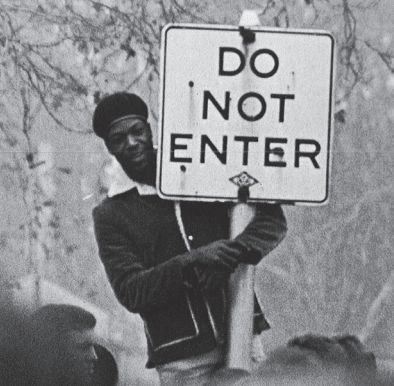
In the 1960s, University of the Pacific’s Stockton student body was overwhelmingly white, but not without sizable groups of nonwhite students. According to an internal report, 10 percent of the university’s enrollees were from “minority groups.” In March of 1969, Burns tallied some of them on the Stockton campus. Among the approximately 3,600 students were 45 Black students, 112 who either came from South America or had Hispanic-sounding surnames, and 121 with Asian backgrounds.[15] Still, the campus population did not reflect local demographics; in 1970, Stockton mirrored the diversity of California’s agricultural industry as a majority-white city with sizable Hispanic or Latino (17.5 percent), Asian (8 percent), and Black (11 percent) populations.[16]
On campus, tensions ran beneath the surface. In 1970, when the student newspaper, the Pacifican, asked several students, “How does it feel to be Chicano at UOP?” they responded candidly: “Sometimes one feels like a loner, being one of a few Chicanos on campus.” Declaring that they had “seen racism and prejudice in this ‘nice’ university,” the quoted student also reassured readers that “the majority of people here are rather nice.”[17] A few months earlier, an alumni newsletter printed an announcement that reveals existing tensions as much as progress, reporting that men’s Greek letter organizations were relinquishing Confederate flags along with “hazing, marching, [and] shouting slogans . . . as students with wider interests join the Greek letter groups.”[18] At the same time, student organizations such as the Black Student Union (BSU), MEChA (Movimiento Estudiantil Chicano de Aztlán), United Filipino Student Association (PILIPI), and Yellow Seed provided spaces for belonging and political action at UOP. The campus also saw an expansion of ethnic studies classes and programs, offering courses on “the Negro in American Literature,” “the Black Man in American History,” “Chicano y Anglo History,” and “Prejudice and Racism.”[19]
Such changes were the direct result of student action. In 1969, BSU members and their allies (many of them football players) walked into fraternities to urge the removal of racist symbols. Ornelas, a founding member of MEChA and a linebacker, recalls, “We went over to the fraternity house to have a conversation with them about why it was in their best interest just to take down that [Confederate] flag.” Black students explained “that it’s incredibly humiliating and shameful. And maybe it’s their fraternity roots, but not something we felt they should be proud of.” Although the exchange was “pretty tense,” according to Ornelas, it was also “straightforward” and effective; the fraternity removed the flag from outside its building.[20] The BSU utilized this strategy throughout 1969 and 1970, visiting and conversing with various campus groups to bring awareness about racial challenges.[21]
A March Leads to the Community Involvement Program
The most well-known action on campus occurred on March 26, 1969, when students from the BSU, which was soon to be MEChA, the Anderson Y, and other civil rights allies marched on Burns Tower, the site of President Burns’s office. Assistant to the President Judy Chambers noted her alarm: “There’s only one way in and one way out, so they wanted to be sure they got President Burns’ attention.”[22] But the protest was peaceful. BSU leader John Stanton spoke and the students presented their demands, pressing the university to be accountable to the local community by admitting and offering scholarships to five hundred students of color from low-income backgrounds for the 1969 fall semester. They also demanded a Black Studies major with a Black professor as director.[23]
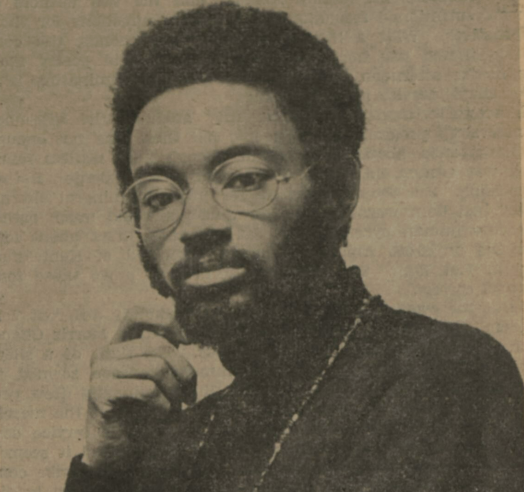
The students got much of what they wanted. President Burns called an emergency meeting of the Executive Policy Committee, which moved on the students’ demands after a three-hour discussion. Behind the scenes, Vice President Jack Bevan met with students to work on establishing what would become the Community Involvement Program. Although administrators had been considering such an endeavor, Burns “admitted that their announcement of the program was hastened by the students’ action.”[24] With the birth of the CIP, the university promised admission to one hundred fifty transfer students from Delta College in Stockton and fifty first-year students in its inaugural year. Faculty and administrators expected the program to shift campus demographics from 10 percent minorities to 20 percent minorities. One faculty member noted that CIP would “change the complexion of UOP,” adding that “being labeled a white racist campus hurts us all.” He mused, “It will be a real part of the [existing white] students’ education to brush shoulders with students from South Stockton.”[25]
Although there was no budget for additional resources, faculty overwhelmingly supported the program, with many signaling their willingness to take on extra students without extra pay. Douglas Moore, a faculty member and administrator, declared that it was a “moral responsibility” to serve the community. Over one hundred faculty pledged their time for tutoring and some raised scholarship funds from their own paychecks.[26]
Over fifteen hundred students have graduated from CIP since its inception. These alumni include NASA astronaut and former regent José M. Hernandez; Mary Lomax-Ghirarduzzi, UOP’s inaugural Vice President for Diversity, Equity, and Inclusion; and president of Pacific Homecare Services and regent Leticia Robles, as well as hundreds of teachers, dentists, business leaders, nonprofit board members, and city government employees who work in and around Stockton. 2022–2023 ASUOP President Ismael Gomez and 2023–2024 VP Cynia Manning are also CIP scholars.[27] Current CIP director Karen Collins and former director Allison Dumas describe CIP scholars as resilient, inclusive, committed to serving their community, and driven to be part of something bigger than themselves.[28] Ornelas believes that CIP opened “the door for not just African Americans, but Latinos, and even people of low-income means of whatever race or ethnicity.”[29] Sally Miller, the first tenured female professor in the social sciences at University of the Pacific, notes that CIP enabled “individuals who maybe otherwise couldn’t have gone to college” to attend UOP.[30]
Protests Continue
Although the spring 1969 march ended with administrative action that benefited the university and the community, other protests at Burns Tower did not result in agreement between students and administrators. In 1971, the new Mexican American Studies program failed to garner the administrative support that had made CIP so successful. Students, especially MEChA members, protested when the program director’s contract was not renewed, but to no avail. Changes in UOP administration—Bevan’s resignation and Burns’s death—meant that two important supporters were gone. Even though the university searched for a new director for Mexican American Studies in 1971, the position went unfilled and the program’s classes disappeared from the catalog until 2013 when the Modern Language Department launched Latin American Studies.[31] Elbert Covell College continued to offer Inter-American Studies wherein “both Latin American and North American content” appeared in every class, and a seminar each semester featured “teams of professors focus[ed] on topics of general hemispheric interest,” but Covell was not an ethnic studies program.[32]
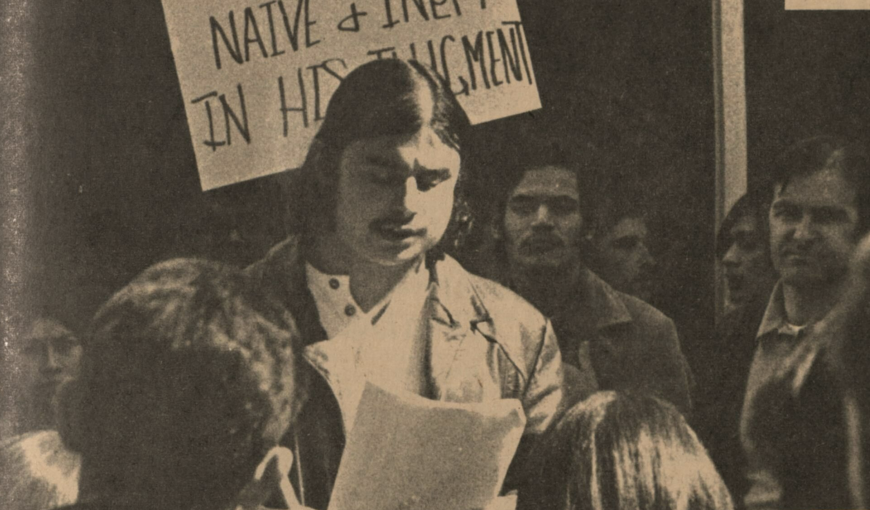
Pacifican. 986.)
Rallies and political action occurred in other campus spaces as well. In 1968, prelaw student Dennis Warren organized a national movement called Let Us Vote, or L.U.V., to demand that eighteen-year-olds be granted the right to vote nationally.[33] Students formed the People’s Alliance for Peace in May of 1970 in response to US expansion into Cambodia during the Vietnam War. With the administration’s endorsement, the group held a teach-in on May 5, 1970—in lieu of classes—on the lawn in front of Anderson Hall.[34] In this way, Pacific students were politically engaged and organized, even as their speeches and gatherings avoided shutdowns and violence.
Stockton students also raised their voices for women’s and LGBTQ+ rights through annual events like Take Back the Night marches and Pride Week. In 1979, a cisgender male candidate for homecoming queen brought attention to exclusionary “beauty contests as ‘sexist, exclusive, and shallow.’”[35] With rallies and signs, students brought awareness to national and global political issues such as abortion rights, the AIDS epidemic, South African apartheid, the Israel-Palestine conflict, the US war in Iraq, the Occupy Movement, and climate change. Looking inward to the university itself, they have persisted in expressing their resistance to issues like fee hikes, program cuts, and the administrative policies of two UOP presidents. Burns Tower was again the site of protest in 1977 when students from Raymond and Callison colleges, two of the experimental liberal arts institutions with accelerated specialized programs, protested a merger in response to budgetary concerns.[36] Pacific students have also continued to demonstrate for racial inclusion, organizing a march for unity following the 2016 election “to reinforce the Associated Students’ position in letting the campus know it will ‘remain a place of inclusion, diversity, and educational opportunity.’”[37]
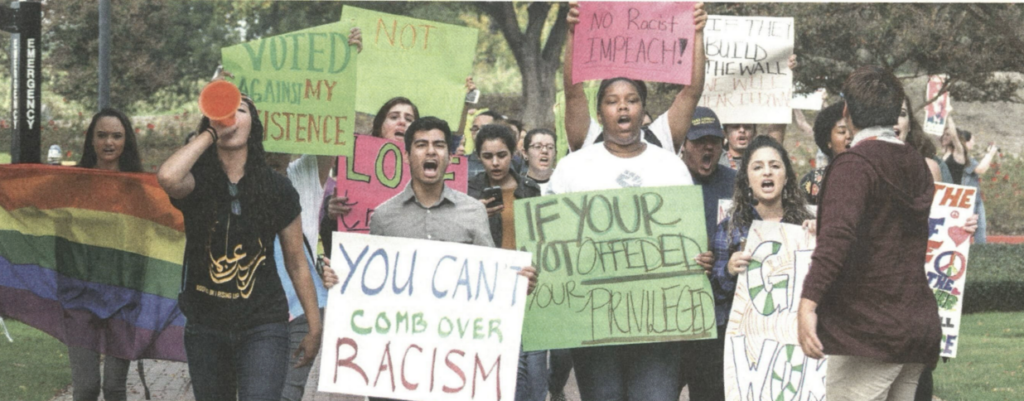
Pacifican. 103.)
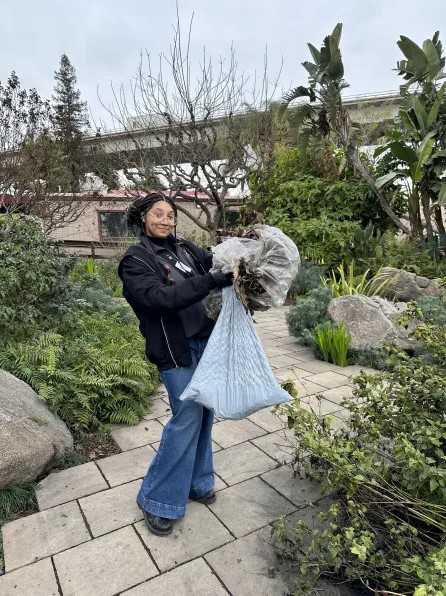
Finally, since the fall of 2022, Pacific has partnered with the State of California to mobilize students for service and civic action through College Corps. University of the Pacific is one of only four private universities involved in the program. Students provided over thirty thousand hours of service during the 2022–2023 academic year, maintaining Pacific students’ legacy of community action and civic engagement.[38]
Burns Tower has long represented a focus on academic excellence. But it also symbolizes the history of CIP and students’ pivotal role in establishing the university’s commitment to inclusion and accountability. Their 1969 demonstration addressed the needs of students of color and strengthened ties between UOP and the Stockton community. At Burns Tower and beyond, students continue to exercise their right to free speech and assembly, and make changes that matter.
Conclusion
Although UOP has not been a center for radical protest, students on the Stockton campus have raised their voices about issues that matter to them throughout the last century. Anderson Hall provided students with the space to execute their broadminded internationalist vision, address social issues, and develop friendships with other students. It also housed various clubs and organizations, including the Japanese Club, which provided crucial support and camaraderie for Japanese American students during the challenges of World War II. Burns Tower was a marker of elite education and academic excellence but starting in 1969, it also became a symbol of student action, community service, and power to create change. These campus spaces should serve as a reminder of Pacific students’ commitment to social activism, understanding, and advocacy. Their service to their communities and persistent calls for action have generated significant change both within and beyond the Stockton campus.
[1] “More Movie Memories,” Pacific Review (Winter 2009): 3, https://scholarlycommons.pacific.edu/pacific-review/19.
[2] “Anderson Hall Addition,” Pacific Review (May 1940): 4, https://scholarlycommons.pacific.edu/pacific-review/90; See also Georgie Whitney, “What’s in a Name?” (1985), University of the Pacific Individual Histories, https://scholarlycommons.pacific.edu/ua-histories/34.
[3] Philip N. Gilbertson, Pacific on the Rise: The Story of California’s First University (University of the Pacific, 2016), 19, http://scholarlycommons.pacific.edu/pacific-pubs/1.
[4] Report on Inquiry on Racial Inclusiveness in Student YMCAs, YWCAs, and SCAs, 1957–1958, Prepared by YWCA National Board, 1958, 3, YWCA of the USA Records, box 767, folder 15, Sophia Smith Collection, Smith College Archives, Northampton, MA; See also “‘Step by Step:’ Interracial Education in the Y.W.C.A,” Sophia Smith Collection, 2009, https://www.smith.edu/libraries/libs/ssc/ywca2/case2.html; and Nancy Marie Robertson, Christian Sisterhood, Race Relations, and the YWCA, 1906–46 (Urbana: University of Illinois Press, 2007).
[5] Associated Students of the College of the Pacific, Naranjado (Yearbook) (1942), 169, https://scholarlycommons.pacific.edu/yearbook/80.
[6] “Pacific Peace Parliament,” Pacific Review (August 1945): 25, https://scholarlycommons.pacific.edu/cgi/viewcontent.cgi?article=1106&context=pacific-review. The Anderson Y remained inclusive, but by the 1960s, club photos were no longer common in the yearbook.
[7] “Tag Dance Climaxes Drive,” Pacific Weekly, February 23, 1940, p. 3, https://scholarlycommons.pacific.edu/pacifican/2150; and “Swim Program Makes a Splash with Cambodian Kids,” Pacific Review (Fall 1994): 5, https://scholarlycommons.pacific.edu/pacific-review/366.
[8] Doris Meyer, “Gwenn Browne Oral History Interview” (2011). Emeriti Society Oral History Collection. p. 20, https://scholarlycommons.pacific.edu/esohc/37.
[9] “Stepping Out: Pacific Students Take on Real Life,” Pacific Review (Summer 2003): 15, https://scholarlycommons.pacific.edu/cgi/viewcontent.cgi?article=1390&context=pacific-review; Gilbertson, Pacific on the Rise, 445.
[10] “New Anderson Hall Completed,” Pacific Review (September 1939): 2, https://scholarlycommons.pacific.edu/pacific-review/87.
[11] Associated Students of the College of the Pacific, Naranjado (Yearbook) (1934), 92, https://scholarlycommons.pacific.edu/yearbook/88.
[12] “Local Japanese Go,” Pacific Weekly, May 8, 1942, p. 1, https://scholarlycommons.pacific.edu/pacifican/1333.
[13] Kara Pratt Brewer, Pioneer or Perish (Fresno, Calif.: Pioneer Publishing Company, 1977), 166-67.
[14] Helene Whitson, “STRIKE!… Concerning the 1968-69 Strike at San Francisco State College,” FoundSF, https://www.foundsf.org/index.php?title=STRIKE!…_Concerning_the_1968-69_Strike_at_San_Francisco_State_College, accessed March 10, 2024.
[15] Robert E. Burns Letter in Pacific Review (Fall 1969): 3, https://scholarlycommons.pacific.edu/pacific-review/213; and Academic Council Meeting Minutes 1969, March 26, 1969, University of the Pacific Archives, Bodies Associated with UOP, Misc. Student Organizations, Black Student Union (BSU) Folder, Holt-Atherton Special Collections.
[16] Campbell Gibson and Kay Jung, “Historical Census Statistics on Population Totals by Race, 1790 to 1990, and by Hispanic Origin, 1970 to 1990, For Large Cities And Other Urban Places in the United States,” Population Division Working Paper, No. 76, (Washington, D.C.: U.S. Census Bureau, 2005).
[17] “How Does It Feel to be Chicano at UOP?” Pacifican, November 13, 1970, p. 12, https://scholarlycommons.pacific.edu/pacifican/977.
[18] “Becoming Men of Uncommon Value,” Pacific Review (Spring 1969): 9, https://scholarlycommons.pacific.edu/pacific-review/211.
[19] Sample student transcript, University of the Pacific, 1974.
[20] Victor Ornelas, Alumni Interview by Jennifer Helgren, March 28, 2023, via Zoom.
[21] Allison Branscombe, “BSU Present Demands at Sorority Houses,” Pacifican, November 25, 1969, p. 1, https://scholarlycommons.pacific.edu/pacifican/1877.
[22] Doris Meyer, ” Judith Chambers Oral History Interview” (2008), Emeriti Society Oral History Collection, https://scholarlycommons.pacific.edu/esohc/26.
[23] Academic Council Meeting Minutes 1969, March 26, 1969.
[24] Academic Council Meeting Minutes 1969, March 26, 1969; and “UOP Plans to Admit 200 Culturally Deprived Youths,” Stockton Record, March 27, 1969, p. 1, 4.
[25] Academic Council Meeting Minutes 1969, March 26, 1969; Gilbertson, Pacific on the Rise, 195.
[26] Academic Council Meeting Minutes 1969, March 26, 1969; “UOP Begins Program of
Community Involvement, Pacific Review (Spring 1969): 3, https://scholarlycommons.pacific.edu/pacific-review/211.
[27] Emily Olson, “A Community of Success,” Pacific Review (Spring 2017): 16-18, https://scholarlycommons.pacific.edu/pacific-review/22); and University of the Pacific, “Mary Wardell-Ghirarduzzi Joins Pacific as Its Inaugural Vice President for Diversity, Equity and Inclusion,” March 16, 2021, https://www.pacific.edu/pacific-newsroom/pacific-announces-new-vice-president-diversity-equity-inclusion.
[28] Zoom conversation with Allison Dumas, Karen Collins, and Jennifer Helgren, May 31, 2023.
[29] Ornelas Interview, 2023.
[30] Gwenn Browne, “Sally Miller Oral History Interview” (2008), Emeriti Society Oral History Collection, https://scholarlycommons.pacific.edu/esohc/28.
[31] “Campus Notes,” Pacific Review (Fall 1970): 14, https://scholarlycommons.pacific.edu/pacific-review/217; Letter from Mecha-UOP, Pacifican, March 5, 1971, pp. 1, 3-4, https://scholarlycommons.pacific.edu/pacifican/986.
[32] “Covell College: The First Ten Years,” Pacific Review (February 1973): 3, https://scholarlycommons.pacific.edu/pacific-review/233.
[33] “National L.U.V. Campaign Off To A Big Start,” Pacifican, January 10, 1969, p. 4, https://scholarlycommons.pacific.edu/pacifican/1839.
[34] Gilbertson, Pacific on the Rise, 200; “PAP Continues Cambodian Protest,” Pacifican, May 15, 1970, p. 1, https://scholarlycommons.pacific.edu/pacifican/1905.
[35] “Homecoming Tradition and Innovation,” Pacifican, October 26, 1979, p. 1, https://scholarlycommons.pacific.edu/pacifican/1910; and “Homecoming Queen?” Pacifican, October 5, 1979, p. 10, https://scholarlycommons.pacific.edu/pacifican/1908.
[36] Gilbertson, Pacific on the Rise, 240.
[37] Ashneil Randhawa, “Student Activists Draw Crowds, Awareness at UOP Anti-Trump Protest,” November 17, 2016, p. 1, https://scholarlycommons.pacific.edu/pacifican/103); Jeremy Gottschalk, “ASUOP Government Senator Grant Kirkpatrick Talks Recent Inclusion Resolution,” Pacifican, December 8, 2016, p. 2, https://scholarlycommons.pacific.edu/pacifican/67.
[38] University of the Pacific, “#CaliforniansForAll College Corps,” https://www.pacific.edu/about-pacific/community/college-corps, accessed March 10 2024; University of the Pacific, “College Corps Fellows Put their Hearts into Community Service,”
Press Release, August 18, 2023, https://www.pacific.edu/pacific-newsroom/college-corps-fellows-put-their-hearts-community-service.
